

Key Takeaways
- A truck will crank but won’t start when the starter turns the engine, but one or more conditions required for combustion are missing.
- Fuel filters, fuel pumps, injectors, and engine-position sensors are among the components worth investigating.
- Starting behaviour, service history, and diagnostic results help workshops narrow down potential faults before replacing parts.
When your truck cranks but won’t start, the starter motor is not always the problem. Although the engine turns over, faults involving fuel supply, injection, airflow, or electronic controls may prevent combustion. The way a truck behaves during starting can provide useful clues about the underlying fault and help workshops identify which systems to investigate first.
At Maxindo, we understand the importance of identifying the correct replacement components before ordering parts. Knowing which systems to investigate can help workshops avoid unnecessary replacements and minimise vehicle downtime.
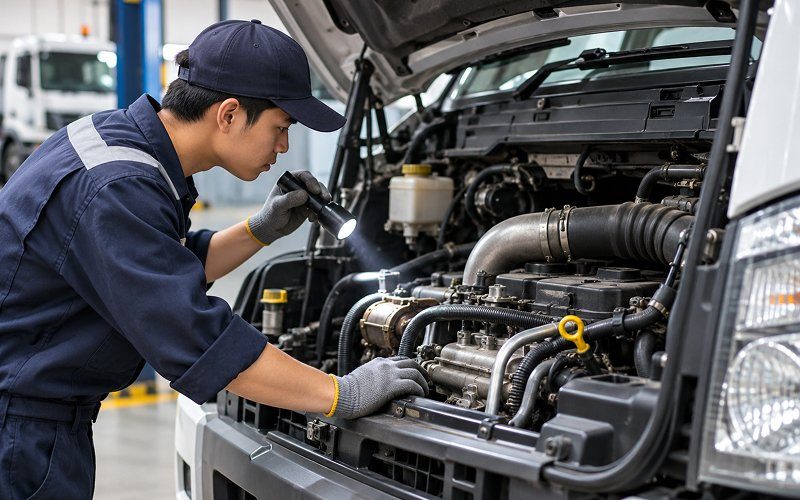
What Does It Mean When a Truck Cranks But Won’t Start?
A crank-no-start condition occurs when the starter turns the engine, but the engine fails to fire or keep running. Diesel engines rely on adequate fuel pressure, correctly timed injection, sufficient airflow, and compression to start. On electronically controlled models, accurate sensor signals and engine control unit (ECU) inputs are also essential. Older mechanically controlled diesel engines use different fuel-injection arrangements, so the relevant checks depend on the engine’s design.
To narrow down the cause, we recommend observing whether the engine fails to fire entirely or starts briefly before stopping. These differences can help workshops identify which systems to investigate first.
What Should Workshops Check When a Diesel Truck Fails to Start?
The truck’s recent starting behaviour, service history, and diagnostic findings can help determine which system to check first. A truck that has struggled to start for several days presents a different diagnostic picture from one that suddenly refuses to start.
For workshops, these differences matter because fuel restrictions, injection problems, and electrical faults can produce similar symptoms. Identifying the likely source early helps workshops focus inspections and avoid replacing components that still work.
- Cranking Speed and Electrical Supply: Even when the starter turns the engine, insufficient battery voltage or slow cranking can prevent it from starting. Check battery condition, electrical connections, and starter performance before investigating more expensive components.
- Fuel Supply: Check whether diesel is reaching the injection system properly. Blocked filters, contaminated fuel, or air entering the fuel lines can interrupt delivery and prevent the engine from starting.
- Fuel Injection: Confirm that the injection system delivers fuel at the required pressure and timing. Faulty injectors, insufficient fuel pressure, or other injection problems can prevent combustion.
- Air Supply: Inspect the air intake for severe blockages or restrictions that could prevent sufficient air from reaching the engine. Even with adequate fuel delivery, insufficient airflow can affect starting.
- Engine-Management Inputs: Check crankshaft and camshaft position sensors, wiring, and electrical connections. Missing or unreliable signals can prevent the Electronic Control Unit (ECU) from controlling fuel injection correctly, even when the engine cranks normally.
- Compression and Starting Aids: If the initial checks do not identify the fault, workshops may need to assess engine compression and inspect glow plugs or other starting aids where fitted. The appropriate procedures depend on the engine model.
Which Parts Could Prevent a Diesel Truck From Starting?
Findings from the initial checks can help workshops identify specific components that may be preventing the diesel truck from starting. The next step is to examine these parts for faults before deciding whether repairs or replacements are necessary.
Fuel Filters
Fuel filters capture contaminants before they reach sensitive injection components. However, excessive contamination can restrict fuel flow and affect starting performance.
For example, if a truck requires progressively longer cranking and its fuel-filter service history is uncertain, checking the filter is a reasonable starting point. Workshops should also check fuel quality and possible air entry before attributing the problem solely to a blocked filter.
At Maxindo, we stock replacement fuel filters for supported Nissan/UD, Renault, and Volvo commercial vehicles. Correct application matching remains important because similar-looking filters may have different specifications.
Fuel Pumps
Fuel pumps maintain the supply needed for diesel injection. If a pump cannot deliver enough pressure, the engine may keep cranking without starting. However, blocked filters or air entering the fuel lines can produce similar symptoms.
When assessing fuel-pump problems, workshops should check diesel fuel delivery and pressure readings to distinguish a faulty pump from restrictions elsewhere in the fuel system. For confirmed replacements, we also advise checking the truck’s engine variant to ensure the replacement pump matches its fuel-system configuration, which can differ between models.
Fuel Injection Components
Even when fuel reaches the engine, incorrect injection pressure or timing can prevent combustion. On electronically controlled systems, faults involving fuel-pressure regulation, metering components, or injection-control circuitry may prevent the engine from developing the conditions needed to start.
Workshops should determine whether the problem lies in the pressure-control system or individual injectors before ordering replacement parts. The relevant components and diagnostic procedures vary between mechanical and electronically controlled injection systems.
That is why we emphasise identifying the affected component before supplying diesel engine spare parts, particularly when injection-system replacements can be costly.
Injectors
Injectors control how fuel enters the combustion chambers. Wear, contamination, or internal leakage can disrupt injection performance and make starting difficult.
On certain common-rail engines, excessive injector leakage can prevent sufficient fuel pressure from building during cranking. However, prolonged cranking may also result from fuel restrictions or other pressure-related problems, so it does not necessarily indicate injector failure.
At Maxindo, we understand the importance of confirming the faulty component before replacement, especially given the cost of diesel injectors. Once the problem has been identified, our team can help workshops source compatible injectors for their commercial vehicles.
Engine Sensors
The engine management system relies on crankshaft and camshaft position sensors to coordinate fuel injection. If either sensor sends an unreliable signal, the engine may continue cranking without starting.
This can explain why a truck suddenly fails to start despite showing no earlier signs of fuel-system trouble. However, a sensor-related fault does not always mean the sensor itself needs replacing. Damaged wiring, loose connectors, or interrupted signals may produce similar symptoms, so checking the electrical connections can prevent unnecessary parts replacement.
What Can Starting Behaviour Reveal About the Fault?
When a truck will crank but won’t start, its behaviour before and during the failure can help workshops prioritise their investigation. For instance, an abrupt failure may suggest an electrical interruption, but workshops should still verify the relevant signals before replacing sensors.
- Engine cranks normally but never fires: Fuel may not be reaching the engine correctly, injection may be affected, or the engine-management system may not be receiving a required sensor signal. We advise checking these areas to narrow down what is preventing combustion.
- Engine starts briefly and then stops: The engine can achieve combustion, but something prevents it from continuing. This may indicate interrupted fuel delivery, falling fuel pressure, or an engine-management fault.
- Truck becomes progressively harder to start: Longer cranking over several days or weeks may indicate a gradually developing problem. Fuel restrictions, declining fuel-system performance, injectors, sensors, or electrical connections may warrant closer inspection.
- Engine cranks more slowly than usual: A weak battery, poor electrical connections, or a worn starter motor may prevent the engine from reaching the cranking speed needed for starting. Workshops should check electrical supply and starter performance before assuming the problem lies in the fuel system.

How Our Parts Expertise Helps Reduce Sourcing Delays
Identifying the faulty component is only part of the repair. Commercial trucks within the same Nissan/UD, Renault, or Volvo range can use different parts depending on the model, production period, engine specification, and component variant. Ordering the wrong replacement can add further downtime after the workshop has already completed its diagnosis.
As an experienced diesel engine spare parts dealer, Maxindo understands these application differences. We can help workshops narrow down the appropriate replacement using details such as the truck model, chassis information, engine specification, existing part number, and component markings.
Our warehouse also carries a broad range of truck parts, including fuel filters, fuel pumps, injectors, sensors, and related electrical parts. This combination of established parts knowledge and available stock helps workshops move more efficiently from identifying the fault to sourcing the component required for the repair.
Get the Right Replacement Parts for Your Truck
When your truck cranks but won’t start, identifying the underlying fault before replacing components can prevent unnecessary repair costs and downtime. Once you confirm the problem, sourcing reliable replacement parts from an established commercial vehicle parts supplier is equally important.
A reputable supplier like Maxindo can help workshops and fleet operators verify part compatibility, identify suitable alternatives, and avoid delays caused by incorrect orders. Quality components, accurate part matching, and timely sourcing all contribute to getting commercial vehicles back into operation.
About Maxindo
Established in 1983, Maxindo is a Singapore-based supplier of commercial vehicle spare parts, specialising in Nissan/UD, Renault, and Volvo trucks. Our inventory comprises approximately 20,000 genuine, OEM, and replacement parts sourced from international suppliers. With decades of industry experience, we help workshops and fleet operators identify compatible components based on vehicle models, engine specifications, and part numbers.
Contact us with your truck model, engine specification, or existing part number so our team can help you identify compatible replacement components.
Frequently Asked Questions
1. How can Maxindo help workshops find the right parts for diesel truck starting problems?
At Maxindo, we offer a wide range of diesel truck spare parts, including engine components, sensors, and electrical parts. With various options across different brands, we help workshops source suitable replacement parts based on vehicle compatibility, repair requirements, and budget.
2. What are the benefits of choosing genuine or non-genuine diesel truck sensors?
Genuine sensors are manufactured or supplied according to the vehicle manufacturer’s specifications, offering compatibility and reliability for the intended application. Quality non-genuine alternatives can also offer cost-effective solutions, giving workshops more flexibility when choosing replacement parts. At Maxindo, we offer both genuine and non-genuine truck parts across different brands, helping workshops find suitable sensors that meet their vehicle requirements, repair needs, and budget.
3. Why choose Maxindo as a one-stop supplier for diesel truck spare parts?
Maxindo offers a comprehensive selection of truck spare parts that extends well beyond engine-related repairs. From small components like bolts to engine parts, brake drums, and body parts such as doors, our product range supports a wide range of maintenance and repair needs. By bringing together parts from multiple brands and across different vehicle systems, we make it easier for workshops and fleet operators to source their needs from one supplier, saving time and simplifying procurement.